On this page
I have been running local LLMs on a laptop with an RTX 4090 and 64 GB of RAM for a while. It works, but it is a compromise. Context windows are tight, quantisation hurts accuracy, and the machine sounds like a jet engine under load. The new NVIDIA RTX Spark, announced at Computex 2026, changes the equation entirely.
What RTX Spark Actually Is
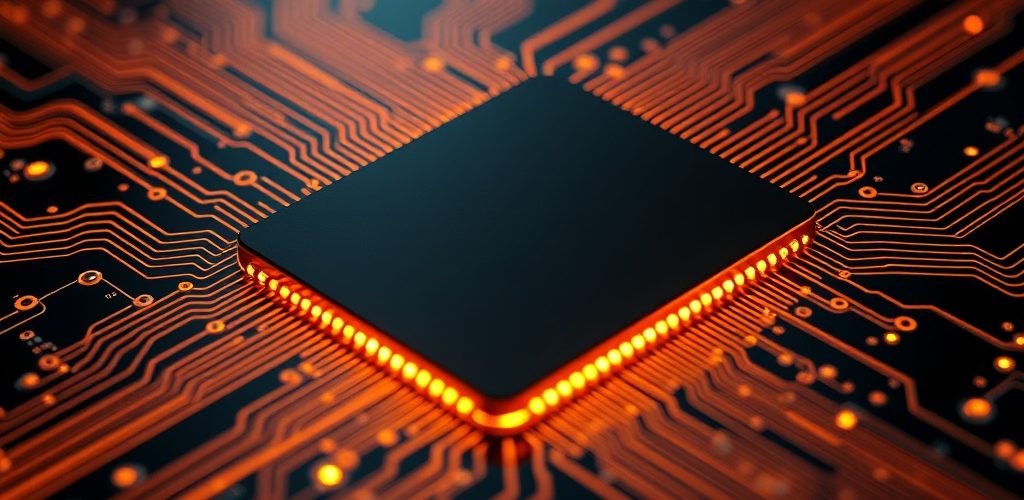
RTX Spark is NVIDIA's first consumer PC chip that combines a CPU, GPU, and AI accelerator in a single piece of Arm-based silicon. It is the same GB10 superchip that powers the DGX Spark, NVIDIA's mini "personal AI supercomputer," but now it is coming to laptops and small desktops.
The flagship configuration is serious hardware:
| Spec | RTX Spark (Flagship) |
|---|---|
| CPU cores | Up to 20 (Arm-based) |
| GPU cores | 6,144 (Blackwell RTX) |
| AI performance | Up to 1 petaflop FP4 |
| Unified memory | Up to 128 GB LPDDR5X |
| Target | Laptops & mini desktops |
Up to 128 GB of unified memory is the number that matters most for LLM inference. With current desktop GPUs, even a 24 GB or 48 GB VRAM ceiling means you are running 70 B models at Q4 or Q3 quantisation. 128 GB changes that. You can load a full 70 B parameter model at FP16 or even think about a 405 B model at reasonable quantisation, all on a laptop or a mini PC under your desk.
Why This Matters for Local LLMs
The LLM community has been chasing two things: bigger models and longer context. Both are memory-bound. The formula is simple: every parameter at FP16 needs 2 bytes. A 70 B model needs 140 GB just for weights. A 405 B model needs 810 GB. With 128 GB you are not there yet for the very largest, but you are close enough that smart quantisation (FP8, FP4) gets you into territory that was previously server-only.
Here is how the math shakes out for common model sizes on a 128 GB RTX Spark machine:
| Model size | FP16 | Q8 | Q4 | FP8 (using FP4 Tensor Cores) |
|---|---|---|---|---|
| 7 B | 14 GB | 7 GB | 3.5 GB | 7 GB |
| 13 B | 26 GB | 13 GB | 6.5 GB | 13 GB |
| 70 B | 140 GB | 70 GB | 35 GB | 70 GB |
| 405 B | 810 GB | 405 GB | 202 GB | 405 GB |
A 70 B model at Q8 fits comfortably with room left for the context window. A 405 B model at Q4 is tight but possible. The FP4 Tensor Cores are the real unlock here: NVIDIA claims up to 1 petaflop of FP4 throughput, which means inference speed stays usable even with aggressive quantisation.
The Arm Elephant in the Room
RTX Spark is Arm-based, not x86. That means legacy Windows software runs through Microsoft's Prism emulation layer. For most AI workloads, this is not a problem. CUDA, PyTorch, llama.cpp, and Ollama all have native Arm builds now. The tools I actually use for LLM inference are already there.
The bigger risk is gaming and legacy creative software. Emulation still carries a penalty. But NVIDIA is betting that its graphics and AI stack, plus years of Windows-on-Arm maturation from Qualcomm's Snapdragon X efforts, makes the trade-off worth it. For a machine whose primary job is local AI inference, I am willing to take that bet.
What I Want to Run on This Thing
My personal wishlist for an RTX Spark laptop or mini desktop:
- Ollama with a 70 B model at Q8 - The Qwen3 235B A22B or Llama 4 Scout at full quality, running locally with no API calls and no data leaving the machine.
- Long-context RAG - Feed a 200K-token technical document into the context window and actually ask questions across the whole thing without chunking hacks.
- Fine-tuning on-device - With 128 GB unified memory, full-parameter fine-tuning of a 7 B or 13 B model becomes feasible. LoRA is already easy; this makes full fine-tuning realistic.
- Agentic workflows 24/7 - NVIDIA's marketing pushes "personal AI agents" that run continuously. With the power efficiency claims, a small desktop RTX Spark could actually sit on a desk and run background agents without sounding like a data center.
The Competitive Landscape
Apple's M-series chips have dominated the efficient local AI conversation because of their unified memory architecture. The M3 Max tops out at 128 GB too, but its GPU compute is nowhere near 6,144 CUDA cores. Qualcomm's Snapdragon X has been the Windows-on-Arm leader, but it tops out at much less memory and far less GPU throughput.
RTX Spark is NVIDIA's answer: Arm efficiency plus CUDA dominance plus RTX graphics. It is the first chip that genuinely competes with Apple on power efficiency while obliterating everything else on raw AI throughput.
Pricing and Availability
NVIDIA is not sharing exact pricing yet. The DGX Spark, which uses the same silicon in a mini PC form factor, retailed around $3,000. Laptop pricing will depend on OEM partners. ASUS, Dell, HP, Lenovo, Microsoft, and MSI all have RTX Spark laptops announced. Desktop variants are coming from Acer, ASUS, Dell, Gigabyte, HP, Lenovo, and MSI.
Ship date is "this fall" - so Q3 or Q4 2026.
Bottom Line
I have been waiting for a laptop chip that makes local LLM inference genuinely uncompromising. RTX Spark is the first one that checks every box: massive unified memory, native CUDA support, FP4 Tensor Cores for speed, and a form factor that fits on a desk or in a bag. If the emulation overhead is manageable and the price is not absurd, this becomes the default machine for anyone serious about local AI.
Source: https://www.nvidia.com/en-us/products/rtx-spark/ , https://www.theverge.com/tech/940589/nvidia-rtx-spark-n1-n1x-laptop-desktop-pc-cpu-gpu-ai-release-date